
Skip to content
Brightline Learning Learning centre · Oakville, ON

Kerr Village, Oakville · Kindergarten to Grade 12

We don't teach your child's grade. We teach their level.

A placement check finds the last thing they truly own. We start one rung below it — deliberately, where it is easy — and they climb from there, two afternoons a week, until grade level is somewhere behind them.

Bench open Thursday sessions run until 7:30 PM

  • Tuesday 3:30 – 7:30 PM 7 of 12 seats free
  • Thursday 3:30 – 7:30 PM 4 of 12 seats free
  • Saturday 9:00 AM – 1:00 PM 9 of 12 seats free
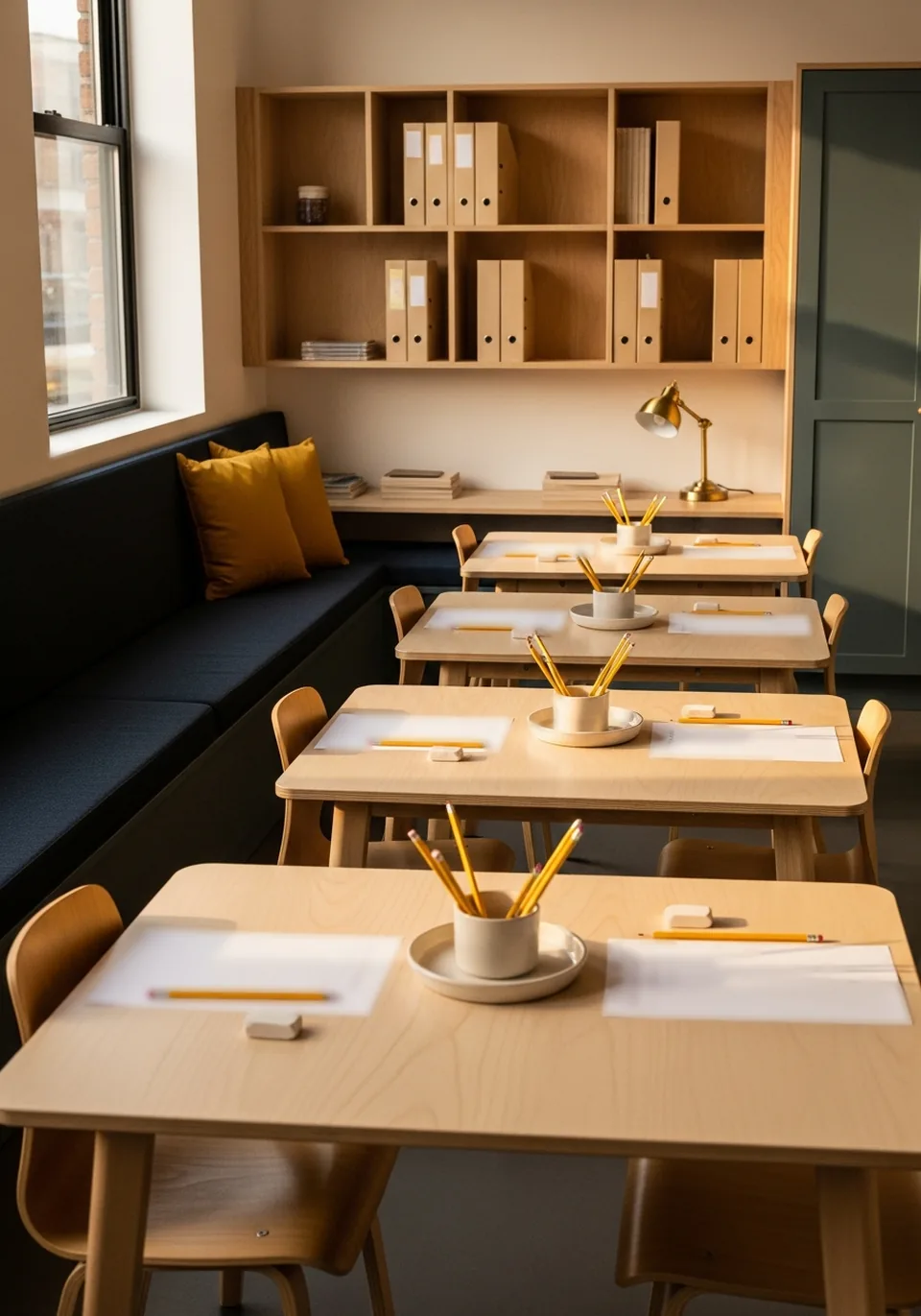
A small learning centre before students arrive: two rows of pale wood worktables with pencil trays, a bench seat under a tall window, and shelving along the back wall

Inside the centre

  • Students enrolled128
  • Instructors on the bench4
  • Seats per session12
  • Progress reports go outFri 29 Aug

The placement ladder

Grade level is a label. This is the ladder underneath it.

Answer six honest questions about what your child can already do unaided. The ladder finds the rung they own, marks the rungs between that and their grade, and works out how long the climb takes at our weekly pace. Nothing is sent anywhere — the whole thing runs on this device.

The check

Prefilled with a common Grade 4 profile so you can see the result straight away. Change any answer and the ladder redraws.

Subject
Can they do this without help? Grades 3–5 · mathematics
  • Recalls times tables to 9×9 without pausing

  • Does long multiplication without losing a carry

  • Divides with a remainder and knows what the remainder means

  • Adds fractions with unlike denominators

  • Converts between fractions, decimals and percentages

  • Finishes a page of twenty questions without stalling halfway

Speed is not the point, but it is the tell. Accuracy with a laboured pace means the skill is not automatic yet, and the next level will collapse on top of it.

Brightline Mathematics

Start at Level 2A, four rungs below Grade 4.

Every rung above the marker is a gap that will keep costing them marks in class until it is closed.

  1. E Fractions: add and subtractGrade 5 · beyond grade level
  2. D Long multiplication and divisionGrade 4 · their grade level Grade level
  3. C Multiplication and division factsGrade 3 · gap to close
  4. B Vertical addition and subtractionGrade 3 · gap to close
  5. A Two-digit addition and subtractionGrade 2 · gap to close
  6. 2A Subtraction with regroupingGrade 2 · where they start Starts here
  7. 3A Addition and subtraction factsGrade 1 · already owned
2A Starting level
4 Rungs to grade level
8–11 Months at two centre days

What week one actually looks like

  • Level 2A, sets 1–20: subtraction with regrouping, twenty questions a page, timed against a standard completion time of 6 minutes.
  • Flagged in the check: Adds fractions with unlike denominators — parked until the ground under it holds.
  • Home practice on the five non-centre days: one set, about 15 minutes, marked at the centre.

Lead instructor for this placement: Daniel Okonkwo, Mathematics

This is a demonstration of a placement interface, not an assessment. It gives no diagnosis, no educational advice and no real placement — an instructor-administered assessment does that.

The weekly cadence

Two afternoons here. Fifteen minutes at home, the other five days.

The centre days are where the work is marked, timed and re-set. The home days are what make it stick. Pick the two blocks that fit your week — a third is available if you want the extra marking.

Choose your centre blocks

Two blocks chosen. Choose a third for the extended bench, or clear one to swap.

Tuesday 3:30 – 7:30 PM

Thursday 3:30 – 7:30 PM

Saturday 9:00 AM – 1:00 PM

Their week, once it settles

  1. MonHome set15 min
  2. TueCentre · 3:30 PM30 min
  3. WedHome set15 min
  4. ThuCentre · 4:15 PM30 min
  5. FriHome set15 min
  6. SatHome set15 min
  7. SunHome set15 min

2 centre blocks · 5 home sets · about 135 minutes a week per subject.

Overhead view of a work station: a blank sheet of paper, a sharpened pencil, an eraser, a small sand timer and a teal tray of pencils on pale wood
Every set is timed against a standard completion time. Over it, and the set repeats — not as a punishment, as the whole method.
  • Miss a centre day and the make-up is booked from the app, not by email tag.
  • Sets are marked before your child leaves the room. Nothing goes home unmarked.
  • Two subjects run back to back in one visit — you make one trip, not two.

Programs

Three ladders. One method holding them up.

Mastery before advancement, in every program. A level is finished when it is finished accurately and comfortably — not when the calendar says the term is over.

Brightline Mathematics

Junior Kindergarten – Grade 12 · 18 levels, 7A to L

Counting through to calculus foundations. The early levels build recall until it is automatic; the middle levels convert that recall into procedure; the senior levels turn procedure into algebra that does not fall over under pressure.

A session
30 minutes at the bench, five sets marked and timed
Advancement
90%+ accuracy and inside the standard completion time, twice
Monthly
$185 per student

Brightline Reading & Writing

Junior Kindergarten – Grade 12 · 17 levels, 7A to K

Letter sounds through to critical essays. Decoding first, then fluency, then comprehension that survives an unfamiliar text, then writing that argues something instead of announcing a topic.

A session
30 minutes at the bench, one passage and one written response
Advancement
Comprehension accuracy plus a written piece the instructor signs off
Monthly
$185 per student

Credit Support, Grades 9–12

Ontario curriculum · course-aligned, not level-based

The one program that follows the school's schedule instead of the ladder. Unit by unit alongside the course the student is actually taking, with the ladder used underneath to patch whatever the course assumes and the student never got.

A session
60 minutes, small group of four, current unit plus gap work
Advancement
Tracked against the course's own unit tests
Monthly
$245 per student

Materials, marking and progress reporting are included in every monthly fee. There is no contract and no term commitment — one month's notice ends an enrolment.

The bench

Four people, and you will know which one has your child.

Every student is assigned a lead instructor who owns their ladder, writes their monthly report and makes the advancement calls. Cover is shared; ownership is not.

An instructor's hand rests on the edge of a blank sheet of paper beside a child's hand holding a pencil at a pale wood table
Twelve seats a session, four instructors on rotation. The ratio is the product — a room where someone notices in the moment that the carry went missing.

Fees

The number on the first of the month, written down before you ask.

Monthly tuition per subject, per student. Everything you have chosen above is already in this total, and it moves when you change your mind.

Your plan

  • Mathematics · Grade 4 · from Level 2A $185.00
  • Two centre blocks a week included
Monthly, from the first of next month
$185.00
Once, at enrolment
$60.00

One subject · 2 centre blocks · registration $60. Placement assessment ($50 per subject) is waived when enrolment follows within 14 days.

Take this to an assessment booking

Illustrative pricing inside a demonstration. No payment method is collected and no charge is ever made.

The rate card, in full

Brightline Learning fees, Canadian dollars
Mathematics, monthly$185
Reading & Writing, monthly$185
Credit Support (Grades 9–12), monthly$245
Extended bench, third centre block+$40 per subject
Registration, once per family$60
Placement assessment, per subject$50, waived on enrolment
Second sibling10% off their tuition
Materials, marking, monthly reportIncluded
  • Billed on the first of each month. A month started is a month billed.
  • One month's written notice to pause or end an enrolment. No term contract.
  • Missed centre days can be made up within the same month at no cost.
  • Prices shown in Canadian dollars, before HST.

Reporting

A monthly report you can actually argue with.

On the last Friday of every month, the lead instructor sends a report to the app and to your inbox. It says what was completed, how fast, how accurately, how often they turned up, and what happens next. If the plan slips, the report says so.

Sample monthly report

Mathematics · a student in their fourth month

Sample
A → BLevels completed this month
96%Mean accuracy across 84 sets
5:40Mean time against a 6:00 standard
8 of 8Centre days attended

Level B, mastery across sets 1–200

Set 144 of 200 · two sets repeated for time, none for accuracy

“The carrying is automatic now — the repeats this month were for pace, not errors, which is exactly the order we want them in. Next month opens Level C and the times will get worse before they get better. That is expected. Please do not let the home set slide in the first fortnight of C.”

Lead instructor's note

A fictional sample for demonstration. It describes no real student, and none of these figures are a claim about outcomes.

The three numbers that run the method

  1. Accuracy

    Below 90% on a set and the set repeats. It is not a mark, it is a gate — the next level assumes this one is automatic.

  2. Standard completion time

    Every level carries a target time per page. Correct but slow means the skill still costs the student thinking they will need for the level above. Slow repeats too.

  3. Attendance

    The single strongest predictor of a climb stalling is missed centre days. It is on the report every month, in a column, because polite silence about it helps nobody.

All of it lives in the family app

Parents see billing, attendance, the ladder and the monthly report. Students see today's set, their streak and nothing else — two audiences, one account, deliberately different screens.

Open the family app

Start here

The assessment is 45 minutes, and you stay for it.

A written placement in both subjects if you want both, then twenty minutes with the centre director going through what came back — rung by rung, with the paper in front of you. You leave knowing the starting level and the honest length of the climb, whether or not you enrol.

  • No obligation, and no pressure in the room
  • $50 per subject, waived if you enrol within 14 days
  • Assessments run Monday to Friday, 10:00 AM to 6:00 PM

Brightline Learning is a fictional business built to demonstrate an interface. This form books nothing, sends nothing and stores nothing beyond your own browser. It is not real enrolment and not educational advice.

Request a placement assessment

Carried over from your plan

  • Mathematics · Grade 4 · indicated start at Level 2A
  • Tuesday 3:30 PM and Thursday 4:15 PM
  • $185.00 a month, $60.00 once at enrolment

Demonstration only — nothing is transmitted. In production this would create the family record, hold the assessment slot and start the intake sequence.

Visit

Ground floor, off the parking lot at the back.

Come and stand at the back of a session before you decide anything. You will learn more in ten minutes of watching than in any conversation about method.

Brightline Learning

  • 312 Kerr Street, Unit 4
    Oakville, Ontario  L6K 3B4
  • (905) 555-0148
  • hello@brightlinelearning.demo
  • Farah Adeyemi, Centre Director

Fictional address, phone and email — this business does not exist. Ten minutes on foot from the Oakville GO station; parking at the rear of the building, entrance under the teal awning.

Hours

Opening hours by day
DayBench sessionsOffice & assessments
Monday10:00 AM – 6:00 PM
Tuesday3:30 – 7:30 PM10:00 AM – 6:00 PM
Wednesday10:00 AM – 6:00 PM
Thursday3:30 – 7:30 PM10:00 AM – 6:00 PM
Friday10:00 AM – 6:00 PM
Saturday9:00 AM – 1:00 PM9:00 AM – 1:00 PM
SundayClosedClosed

Today is Thursday — bench sessions 3:30 to 7:30 PM.

Placement

How the real assessment works

The six questions on this page are a demonstration. A real Brightline placement is written, timed and marked in the room, and it works downwards rather than upwards.

  1. Start above. The student begins on material a little beyond their grade, so the first thing we see is where it breaks.
  2. Walk it back. Pages descend a level at a time until the student is accurate and comfortable, not merely accurate.
  3. Time every page. Two students can both score 20 out of 20 and belong three levels apart. The clock is what separates them.
  4. Place one rung lower still. Whatever the assessment says, the enrolment starts a rung below it. The first fortnight should feel easy on purpose — that is where the habit is built.
  5. Read it back to you. Twenty minutes, the actual pages on the table, and the honest number of months.

45 minutes · $50 per subject, waived on enrolment within 14 days · Monday to Friday, 10:00 AM to 6:00 PM.

Demonstration only

Nothing was sent.

This is what a real request would have carried to the centre director. Brightline Learning is fictional, so it stayed in this browser.